

Sailing Differently: How sailing fits into sustainable tourism
Friday 03 October 2025
Sailing Differently: How Sailing Fits into Sustainable Tourism
As responsible travel becomes a priority for many holidaymakers, sailing stands out as a gentle and environmentally friendly alternative. Far from mass tourism and its often significant impacts, stepping aboard a sailboat means choosing a different way to discover the world—guided by the rhythm of the wind and the sea.
Sailing: a low‑carbon mode of travel
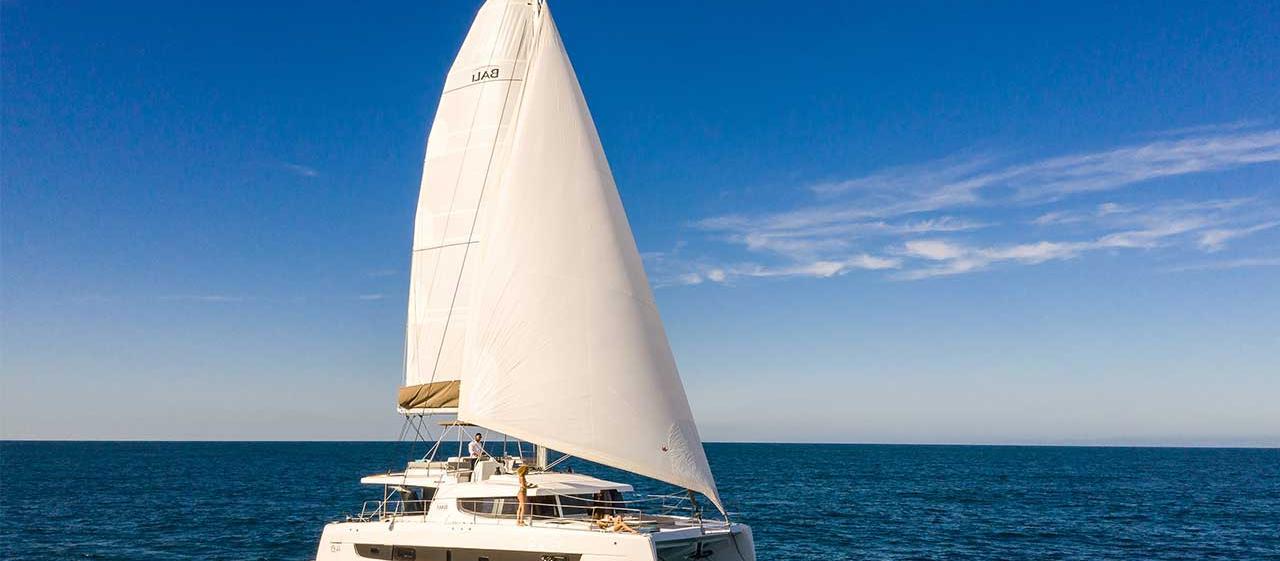
Sailing is, above all, travelling using a natural, free and inexhaustible source of energy: the wind. Unlike motor‑powered cruise ships or airplanes, its carbon footprint remains limited—especially when favouring wind propulsion over engine use. The sea then becomes a true space for sustainable exploration, without excessive noise or major pollution.
A slower, more authentic pace of travel
Sailing invites you to rediscover time. Here, no journey is rushed in a few hours: each crossing is experienced fully, shaped by the weather conditions. This deliberate slowness allows for a more intimate connection with nature, the chance to savour each stopover, and the experience of collective life on board. Travelling by sail also raises awareness of one’s environment—of the sky, the currents and the horizon.
Supporting local economies and short supply chains
Sailing stops naturally lead to small harbours, far from large tourist infrastructures. This encourages encounters with local residents, purchases of seasonal and local products, and meals in small family‑run inns. Provisioning becomes an opportunity to support the economy of the regions visited, while discovering authentic flavours.
More than a means of transport, a way of travelling
Sailing is not just a way to get from one place to another—it is a complete travel experience, one that respects the environment and fosters discovery. Choosing this form of tourism means reducing your ecological footprint while enjoying a meaningful adventure built on connection, sharing, and exploration. Sailing differently means choosing a more sustainable future, without giving up the pleasure of escape.