

Family catamaran cruise: the complete guide
Wednesday 27 May 2026
Family Catamaran Cruise: The Complete Guide for a Stress-Free Vacation
Going on a family catamaran cruise is now one of the most sought-after experiences for travelers looking to disconnect, enjoy comfort, and spend quality time together. Far from traditional holidays, this type of trip combines freedom, privacy, and discovery in a safe environment perfectly suited for children. However, for the experience to be truly successful, it must be carefully planned: choosing the right boat, organizing the stay, ensuring safety on board, and managing the overall pace. In this complete guide, discover how to organize a family catamaran cruise and turn a simple week at sea into lasting memories.
Why Choose a Catamaran for a Family Cruise?
Choosing the right boat is essential. For a trip with children, a catamaran naturally stands out as the best option. Thanks to its twin-hull design, it offers exceptional stability, reducing movement and minimizing seasickness—something especially reassuring for children. On board, the living spaces are also unmatched. A catamaran features a spacious cockpit, separate cabins, and multiple relaxation areas, allowing everyone to enjoy their own space. This overall comfort immediately enhances the family experience: fewer constraints, smoother daily life, and above all a real feeling of a “home at sea.”
Sailing with Children: Adopting the Right Mindset
A successful family cruise is primarily about adjusting your pace. Unlike a traditional vacation, it’s not about doing as much as possible, but about truly enjoying the time together. Children naturally adapt to life at sea when they are in a simple, structured, and reassuring environment. Sailing quickly becomes both a playground and a learning experience. It is essential to design the trip around three key pillars:
- short sailing distances
- regular stops
- quality time on board
This travel style creates a calm and balanced rhythm, where each day revolves around enjoyment rather than constraints.
Safety at Sea with Children: The Essentials Safety on a family catamaran cruise is a top priority. When properly managed, it quickly becomes a natural reflex rather than a source of stress. Catamarans are designed to provide a secure environment, with protective netting, wide spaces, and easy circulation. However, a few simple rules should be established from the start:
- wear properly fitted life jackets
- never leave a child unattended on deck
- secure sensitive areas (galley, cockpit)
- supervise swimming at all times
Proper preparation and a clear briefing create a reassuring framework. Once these habits are in place, vigilance becomes second nature and the experience remains fully enjoyable.
With or Without a Skipper: What’s Best for a Family?
The question of whether to hire a skipper is central to planning a catamaran cruise. For many clients seeking comfort and total relaxation, a catamaran charter with a skipper is usually the best option. The skipper takes care of navigation, safety, and itinerary adjustments, allowing families to focus entirely on enjoying their vacation. They also provide significant added value with their local expertise, helping you choose the best anchorages, optimize routes, and discover hidden gems. The main advantages are clear:
- no mental load related to navigation
- enhanced safety
- optimized itinerary
- a smooth and personalized experience
On the other hand, sailing without a skipper offers full autonomy but requires strong sailing skills and a higher level of responsibility.
The Ideal Pace for a Family Catamaran Cruise
The pace of navigation is probably the most critical factor in the success of your trip. The most common mistake is trying to do too much. In reality, a family cruise should focus on the quality of experiences rather than the number of stops. The right balance is based on a few simple principles:
- sail no more than 2 to 4 hours per day
- choose safe and easily accessible anchorages
- plan days without sailing
- adjust the schedule according to energy levels
This rhythm allows children to fully enjoy the experience while giving parents a true sense of relaxation and disconnection.
Planning and Preparation: The Key to a Stress-Free Experience A successful cruise starts long before boarding. Proper planning helps avoid most unnecessary stress. Key elements to anticipate include:
- a checklist adapted to life at sea
- organized provisioning
- simple activities (games, snorkeling)
- appropriate clothing for marine conditions
It is also important to understand how the charter process works, especially the check-in and check-out phases, which are key moments of the experience. Check-in allows you to verify the condition of the boat and understand how everything works, making the rest of the trip much smoother. A well-structured and experienced agency will make a significant difference by offering a smooth and reassuring process from the very beginning.
The Ideal Destination for a Family Catamaran Cruise
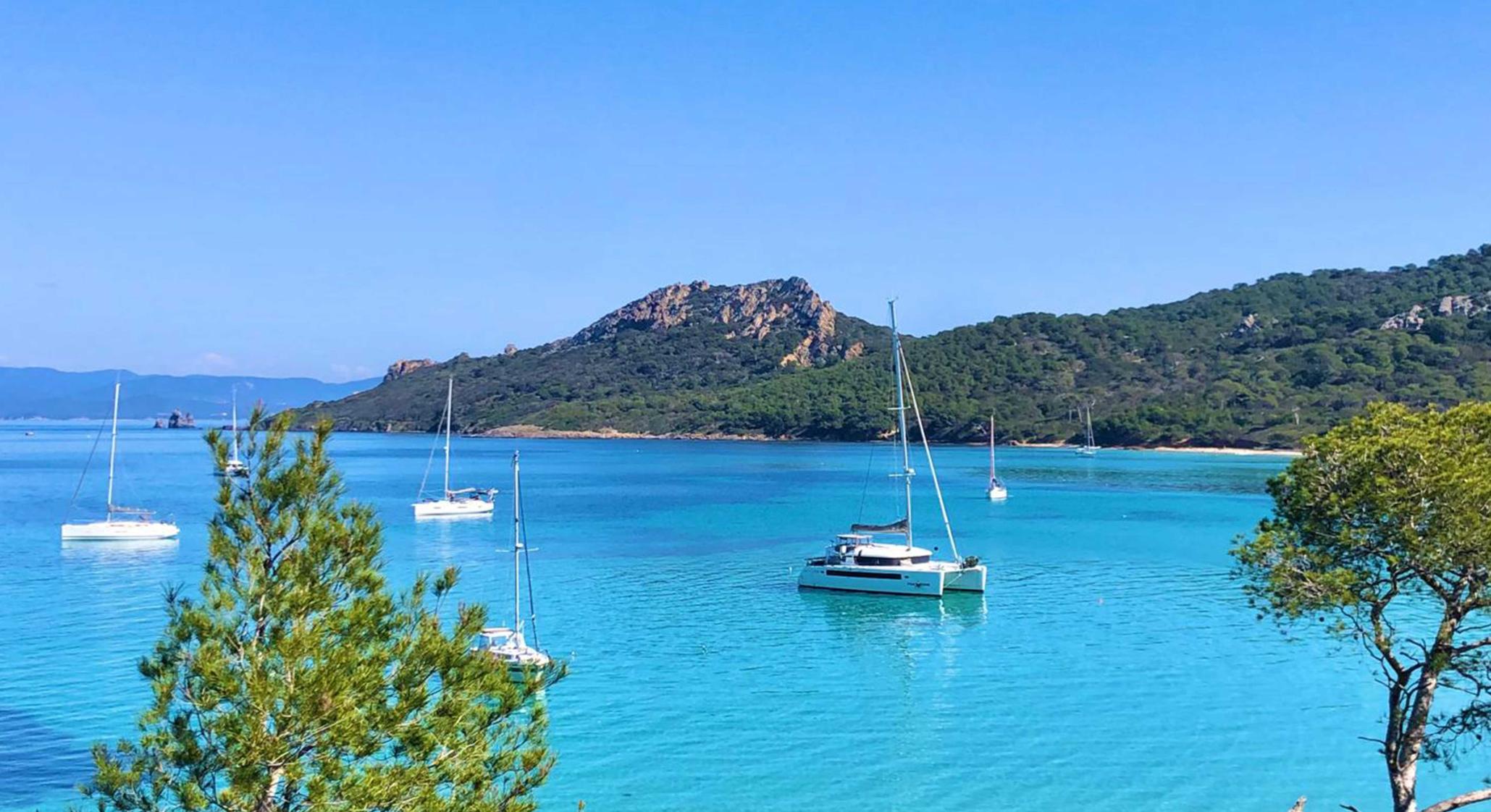
Choosing the right destination is essential for a successful family catamaran cruise, as it directly impacts sailing comfort, daily pace, and the overall quality of the experience. For a first-time trip or a holiday with children, it is best to choose areas known for calm sailing conditions, short distances between stops, and safe anchorages. The Mediterranean naturally stands out as a benchmark, with a season running from April to October and generally favorable conditions for family cruising. Destinations such as the French Riviera or Sardinia offer the perfect balance between preserved landscapes, protected coves, and easy access to ports. They allow you to alternate between short sailing times and relaxing moments, while ensuring child-friendly stops.
Choosing a family catamaran cruise means choosing a different kind of travel experience—one where time slows down, essentials take priority, and every moment truly matters. To ensure a successful trip, three elements are key: careful planning, the right pace, and professional support. This combination is what transforms a week at sea into a true escape—one that stays with you long after you return to shore.